

Table of Contents
- Handmade vs. Machine-Made: What Artisanal Makeup Brushes Actually Deliver
- The Difference Between Synthetic and Natural Hair Brushes
- Durability, Longevity and the True Cost of Artisanal Makeup Brushes
- How Brush Shape Affects Makeup Application and Finish
- How to Choose the Right Makeup Brush Set for Your Routine
- Environmental Impact of Artisanal Production vs. Mass Manufacturing
- How to Clean Makeup Brushes Properly to Protect Your Investment
- Conclusion
Last Updated: August 13, 2026
Handmade vs. Machine-Made: What Artisanal Makeup Brushes Actually Deliver
Artisanal makeup brushes are handcrafted by skilled craftspeople who adjust bristle density, ferrule tension, and handle balance by hand, achieving consistency that automated production cannot replicate. At Artist Atelier, every brush is handcrafted by master artisans in Seoul, directly shaping performance against skin.
Machine-made brushes prioritise speed: machinery crimps ferrules uniformly, cuts bristles to fixed lengths, and bonds handles in seconds. What gets lost is nuance, the slight bristle taper variation, hand-testing of softness, and manual fibre distribution adjustment that determines how a brush picks up and deposits product.
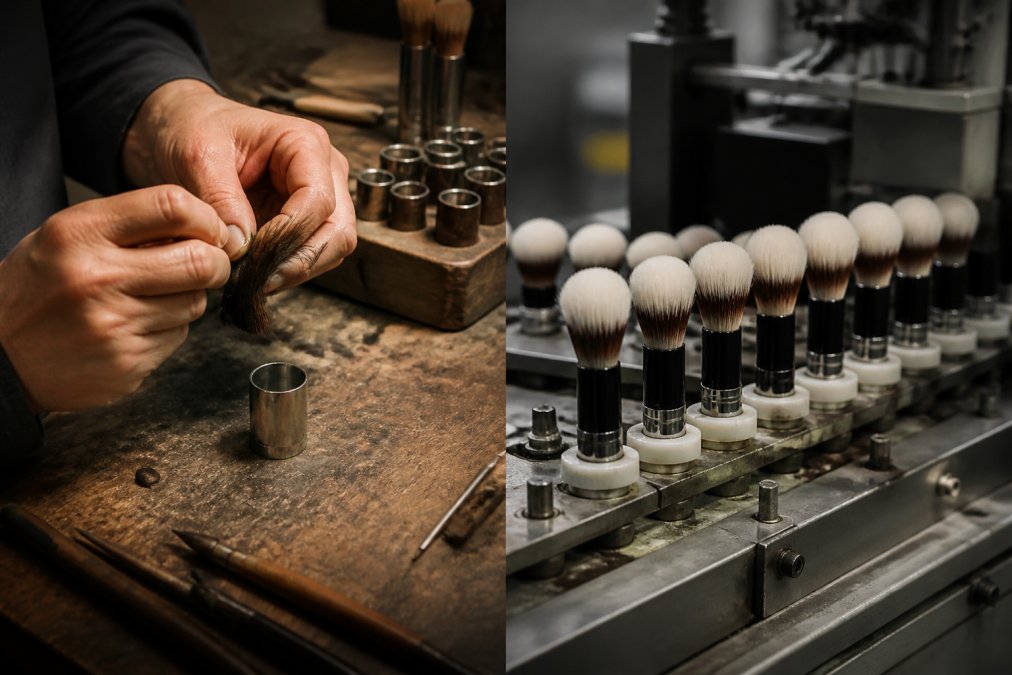
Handcrafted brushes with properly set bristle density blend powder and cream products with fewer strokes, reducing patchiness and layering needs. This delivers a softer, more airbrushed finish without additional product.
Bristle Density, Ferrule Construction and Handle Design
Bristle density refers to the number of fibres packed into the ferrule. Higher density creates more surface contact with skin, improving product pickup and distribution. Artisans assess density by feel and visual inspection, adjusting the bundle before crimping. Mass-produced brushes rely on pre-set machinery that cannot account for natural fibre thickness variation.
The ferrule is the metal collar connecting bristles to handle. Poor ferrule construction causes shedding and bristle loss. Artisanal ferrules are crimped with controlled pressure to secure fibres without crushing them. Handles, typically wood or resin, are weighted and shaped for ergonomic balance, reducing hand fatigue during extended use.
How to Authenticate a Handcrafted Brush
Examine three elements: ferrule finish, bristle uniformity, and handle construction.
- Ferrule finish: Handcrafted ferrules show subtle, intentional tooling marks. Machine-crimped ferrules are perfectly uniform but sometimes show stress fractures at the crimp edge under magnification.
- Bristle uniformity: Artisanal brushes have hand-tapered bristles with natural, slightly varied taper rather than blunt, uniform cuts.
- Handle weight and balance: A well-constructed handle distributes weight so the brush rests without tipping. Lightweight plastic handles rarely achieve this.
The Difference Between Synthetic and Natural Hair Brushes
Choosing between synthetic and natural hair brushes depends on fibre structure, product compatibility, and skin response.
Natural hair brushes use animal fibres, goat, squirrel, or pony hair. These naturally scaled fibres grip powder particles efficiently, making them ideal for loose and pressed powders, blush, and bronzer. The trade-off is that natural fibres absorb liquid and cream products, making blending less precise and cleaning more demanding.
Synthetic fibre brushes use engineered nylon or taklon. The smooth, non-porous fibres do not absorb product, making them better for foundations, concealers, and cream blushers where product wastage and streaking are concerns. According to The British Beauty Council's sustainability and materials resources, the shift toward synthetic fibres has accelerated as the industry moves away from animal-derived materials.
Performance on Different Makeup Textures
| Makeup Texture | Recommended Fibre | Reason |
|---|---|---|
| Loose powder | Natural hair | Grips and distributes fine particles evenly |
| Pressed powder | Natural or synthetic | Either works; natural gives softer finish |
| Liquid foundation | Synthetic | Non-porous; prevents absorption and streaking |
| Cream blush | Synthetic | Precise deposit without product waste |
| Cream contour | Synthetic | Allows controlled blending of dense pigment |
| Eyeshadow (matte) | Natural hair | Diffuses product softly across the lid |
| Eyeshadow (glitter/foil) | Synthetic | Picks up and packs dense shimmer particles |
The texture of the product matters more than its category. A satin-finish foundation behaves differently from a full-coverage matte formula, and brush fibre should match the texture.
Sensitive Skin and Hypoallergenic Fibre Considerations
For sensitive skin, fibre choice is a requirement, not a preference. Natural animal hair can carry residual proteins and allergens even after processing, creating genuine risk for those prone to redness or contact dermatitis. Synthetic fibres are inherently hypoallergenic because they contain no animal proteins. The British Association of Dermatologists' guidance on contact dermatitis triggers identifies animal-derived materials among common causes of facial contact reactions.
Artisanal makeup brushes made with high-grade synthetic fibres eliminate this risk entirely. The fibres are ultra-soft and non-abrasive, working against skin without triggering micro-friction that causes post-application redness in reactive skin types.
Durability, Longevity and the True Cost of Artisanal Makeup Brushes
Artisanal makeup brushes cost more upfront than mass-produced alternatives, but the cost-benefit analysis changes significantly when accounting for lifespan. Mass-produced brushes commonly show bristle shedding, ferrule loosening, and handle degradation within six to twelve months. Artisanal brushes with properly set ferrules and quality fibres last for years with correct care.
The real difference emerges by the fiftieth application. A poorly constructed brush has already lost shape, shed fibres, and delivers inconsistent results. A well-made artisanal brush performs identically on application fifty as on application one.
Many beauty professionals find a smaller kit of high-quality artisanal brushes outperforms a large collection of budget tools. For current pricing on Artist Atelier brushes, visit the website directly, as pricing varies by collection.
How Brush Shape Affects Makeup Application and Finish
Brush shape is the most underappreciated variable in makeup application. A flat brush and a dome brush produce entirely different results with the same product on the same skin.
Key shapes and applications:
- Flat foundation brush: Applies liquid and cream products with pressing strokes rather than sweeping motions to build coverage precisely.
- Dome or kabuki brush: Distributes powder products in a diffused, natural finish with circular blending that avoids hard lines.
- Fan brush: Best for light dusting of powder or highlighter with minimal product pickup.
- Tapered blending brush: The workhorse for eyeshadow, allowing precise product placement in the crease while tapered sides blend edges without harsh lines.
- Angled contour brush: The angled head follows the natural cheekbone hollow, making contour placement and blending easier without overextension.
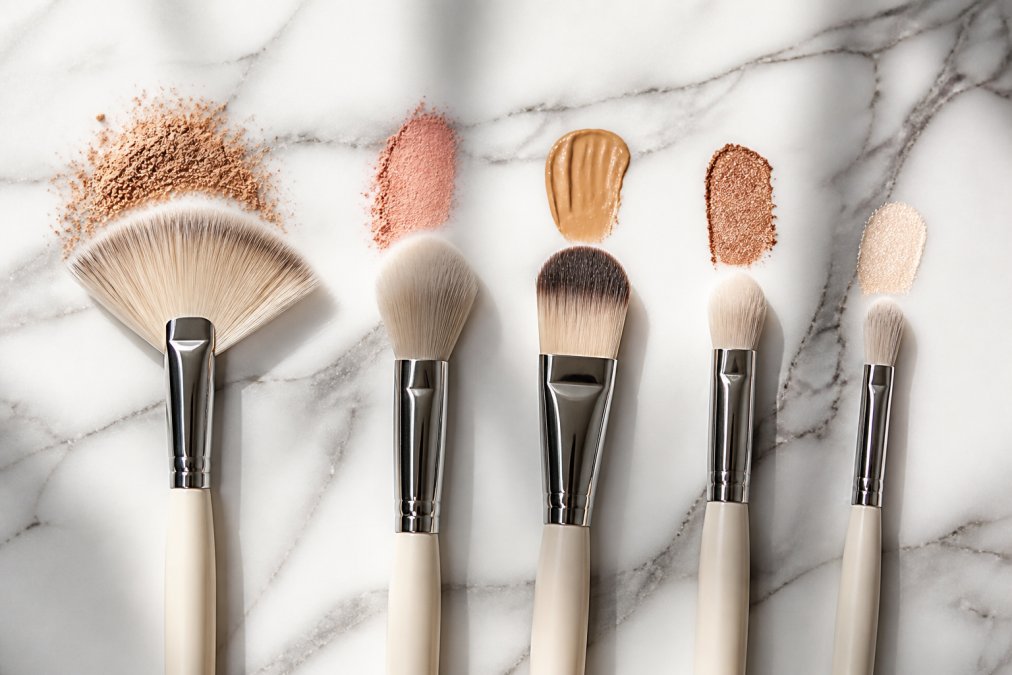
A tapered brush with cream contour builds definition faster than a flat brush because the pointed tip allows edge control. Conversely, a flat brush with powder bronzer creates a more diffused, sun-kissed result than a tapered one. Matching shape to texture and intent is the foundation of precision application.
How to Choose the Right Makeup Brush Set for Your Routine
The most common mistake is purchasing a large set assuming more brushes equal more versatility. Most people use four to six brushes consistently; the rest accumulate unused.
A practical starting kit for daily base and face makeup:
- Foundation brush (flat or buffing): For base application
- Powder/setting brush (dome or kabuki): For setting and finishing
- Contour/blush brush (angled or tapered): For facial definition
- Blending brush (dome, medium): For diffusing and softening edges
- Eyeshadow brush (tapered): For lid and crease work
- Liner or detail brush: For precise eye and brow work
This six-brush structure covers most everyday looks and aligns with the minimal-kit philosophy professional makeup artists use on set. Add brushes beyond this core only when driven by a specific technique gap, not by the appeal of a full set.
Environmental Impact of Artisanal Production vs. Mass Manufacturing
Mass manufacturing involves large-scale factory operations, high-volume material sourcing, and significant packaging waste. Machine-made brushes typically use synthetic adhesives, chrome-plated ferrules, and non-recyclable plastic handles. Lower material quality shortens product lifespan and increases replacement frequency.
Artisanal production operates at a different scale. Smaller batch sizes mean lower material waste per unit. Quality materials, including sustainably sourced synthetic fibres and natural wood handles, align with longer product lifespan, reducing total brushes needed over time. According to the UK Government's guidance on sustainable consumption and production, extending product lifespan is one of the most effective strategies for reducing household waste.
The shift toward synthetic fibres in artisanal brushes also addresses animal welfare concerns. High-grade synthetic fibres now replicate natural hair performance closely enough that application quality trade-offs are negligible for most users.
How to Clean Makeup Brushes Properly to Protect Your Investment
Incorrect cleaning causes premature brush deterioration more than wear. Soaking brushes upright in water allows moisture to seep into the ferrule, loosening adhesive and causing shedding.
Weekly cleaning routine (for regular users):
- Wet bristles under lukewarm running water, pointing downward. Never submerge the ferrule.
- Apply gentle brush cleanser or mild soap to the palm.
- Swirl bristles in the palm using light circular motions until product residue releases.
- Rinse thoroughly under running water, pointing downward, until water runs clear.
- Gently reshape the bristle head.
- Lay flat on a clean towel to dry. Never stand brushes upright while wet.
For synthetic fibres, mild micellar water or dedicated brush cleanser works well. Natural hair brushes benefit from conditioning cleanser that prevents fibres from drying out and becoming brittle.
Spot-cleaning between uses with quick-dry brush spray maintains hygiene without full wash cycles, useful for colour-switching during makeup application. Synthetic brushes dry faster than natural hair and tolerate frequent washing without fibre degradation, making them easier to maintain in high-use routines.
Maintaining a high-performance makeup routine requires tools matching your technique's standard. The challenge most people face is not skill but working with brushes that shed, lose shape, or irritate skin after months of use. Artist Atelier brushes are handcrafted by master artisans using ultra-soft, hypoallergenic materials, designed to deliver a seamless base and airbrushed finish that holds up over years of regular use. The minimal-kit philosophy means investing in fewer, better tools rather than accumulating underperforming collections. Add Artist Atelier brushes to your kit and experience the difference precision craftsmanship makes from the first application.
Frequently Asked Questions
Do expensive artisanal makeup brushes really make a difference?
Yes, the difference shows up in everyday use. Handcrafted brushes use higher-grade fibres that are hand-sorted for consistent bristle density, which produces smoother product pickup and more even texture distribution than mass-produced alternatives. The ferrule is typically crimped more precisely, so bristles shed less over time. For anyone applying foundation or powder daily, that consistency translates directly into a more airbrushed, professional finish without extra effort.
What materials are used in high-quality artisanal makeup brushes?
Premium artisanal brushes use either natural hair, such as squirrel, goat or pony, or high-grade synthetic fibres engineered to mimic natural tapered tips. Natural hair excels at picking up and diffusing powder products, while synthetic fibres are non-porous, making them better suited to liquid and cream formulas. The ferrule is usually brass or aluminium, and the handle is often lacquered wood or resin, chosen for ergonomic balance rather than cost-cutting.
How can you tell if a makeup brush is genuinely handcrafted?
Examine the bristle tip under good light: handcrafted brushes show slight natural variation in the fan shape because fibres are set by hand rather than cut by machine. The ferrule should sit flush with the handle, with no visible glue overflow. Bristles on a quality handcrafted brush resist splaying when pressed lightly against the back of your hand. Machine-made brushes often have blunt, uniform cut tips and ferrules that wobble slightly under pressure.
Are artisanal makeup brushes safe for sensitive skin?
Artisanal brushes made with hypoallergenic synthetic fibres are generally well-tolerated by sensitive skin. Unlike some lower-grade natural hair brushes, synthetic fibres do not harbour allergens or retain bacteria as readily, reducing the risk of redness and irritation. The softness of hand-sorted, tapered fibres also means less mechanical friction on the skin during blending. Always patch-test a new brush on your inner wrist before full facial use if your skin reacts easily.
This article was written using GrandRanker