

Table of Contents
- Best Face Brushes for Liquid and Cream Makeup: How We Tested
- The Best Foundation Brush for Liquid Foundation
- How to Apply Liquid Foundation With a Brush
- The Best Brush for Cream Blush
- Synthetic vs Natural Bristles for Cream and Liquid Formulas
- How to Clean Foundation Brushes
- Matching Brushes to Skin Type and Texture
- Frequently Asked Questions
Last Updated: October 18, 2026
Best Face Brushes for Liquid and Cream Makeup: How We Tested
A brush that drinks your foundation is costing you money every morning. At Artist Atelier, we build our face brushes around one principle: synthetic bristles should deposit formula onto skin, not absorb it.
This guide covers the best face brushes for liquid and cream makeup application, judged on the criteria that actually change your finish. We are not chasing a long list.
The Criteria That Decide a Good Brush
Four things separate a working brush from a decorative one: bristle material, density, head shape, and how the brush behaves under pressure.
- Bristle material. Synthetic fibres do not swell or absorb water-based and cream formulas. Natural hair does, which wastes product and dulls coverage.
- Density. A dense brush presses formula into skin. A loose one pushes it around.
- Head shape. Angled and rounded heads reach the hairline, nose and jaw. Flat heads streak on curved surfaces.
The Quick Comparison
| Brush | Price | Best For | Head Shape | Bristles |
|---|---|---|---|---|
| Foundation Brush - Streak-Free Liquid & Cream Coverage | £14.00 | Liquid, cream and serum formulas | Rounded angled, 19mm | Premium synthetic |
| Flawless Foundation Brush - Seamless Base Makeup | £25.00 | Full coverage and layering | Tapered, high-density | Synthetic, tri-colour |
| Complete Face Brush Collection | £95.00 | Full routine, base to finish | Mixed five-brush set | Premium synthetic |
| The Ultimate Finish Collection | £90.00 | Setting, sculpting, finishing | Powder and sculpting heads | Fox hair, hypoallergenic |
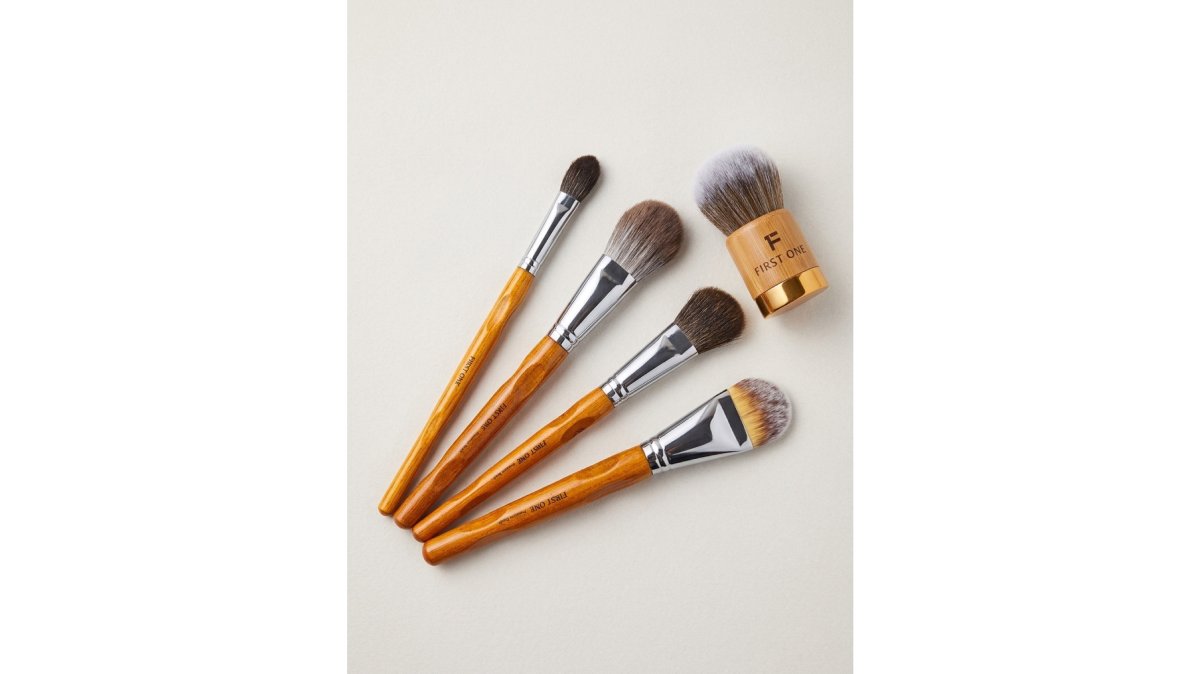
The Best Foundation Brush for Liquid Foundation
Our pick for liquid foundation is the Flawless Foundation Brush - Seamless Base Makeup at £25.00.


Synthetic bristles are the reason it works. They do not soak up liquid, so your foundation stays on the brush face and transfers where you place it.
If you want one brush for both coverage and detail, the Foundation Brush - Streak-Free Liquid & Cream Coverage at £14.00 is the sharper tool.

How to Apply Liquid Foundation With a Brush
Applying liquid foundation with a brush comes down to three moves: dot, buff, and press. Most streaky results come from skipping the press. But the technique that works for a runny serum foundation is not the technique that works for a thick cream, so match your motion to the formula first.
Match the motion to the formula
- Thin, watery liquids and serums. Use a stippling motion, tap the brush straight down and lift, rather than dragging. Thin formulas move easily and streak if you sweep them. Work in small sections, roughly one cheek at a time, before the formula sets.
- Medium-coverage liquids. Buff in small circles, then press flat to settle the formula. This is the default motion for most everyday foundations.
- Thick creams and full-coverage formulas. Press and roll. Load less than you think you need, press the brush flat into the skin, then roll the head slightly to release product. Buffing a thick cream over itself lifts the layer underneath.
The four-step method
- Dot three to five small amounts across the centre of the face, nose, inner cheeks, chin, centre of forehead. Starting at the perimeter pushes product into the hairline before you have coverage where it matters.
- Buff in small circles, working outward from the nose. Keep the brush at a low angle; holding it upright concentrates pressure into one point and leaves marks.
- Press the brush flat against the skin to set the formula without lifting it. This is the step most people skip, and it is the one that removes streaking.
- Refine the hairline, nose and jaw with the edge of an angled head. A 19mm rounded angled head reaches these areas without a second brush.
Technique by skill level
- Beginner. Dot first, then buff. Dotting gives you control over how much product lands on the face, so you are less likely to overload one area. Use a dense synthetic brush and keep the motion slow.
- Intermediate. Add the press step and work in sections. Learn to assess coverage after each layer rather than adding more product pre-emptively.
- Advanced. Stipple thin formulas, press thick ones, and use the edge of the brush for detail. Layer coverage in two thin passes rather than one heavy one, the finish is more even and wears longer.
Troubleshooting streaks and patchiness
- Streaks along the jaw and hairline. Usually too much product on the brush, or a flat head on a curved surface. Use the edge of an angled head and load less.
- Patchiness on the cheeks. Over-buffing. Switch to pressing and work in thinner layers.
- Product sitting on top of the skin. The brush is too soft or too loose to press the formula in. Use a denser head.
The Best Brush for Cream Blush
The best brush for cream blush is a soft, tapered head that picks up a small amount of colour and diffuses the edge.
The Black Fox Blusher Brush in our Complete Face Brush Collection is sized for exactly this.
Apply cream blush in thin layers. One tap, blend, assess, then add more. You cannot remove a heavy first pass without disturbing the foundation beneath it.
Synthetic vs Natural Bristles for Cream and Liquid Formulas
Synthetic bristles win for cream and liquid makeup, without much debate. Natural hair absorbs moisture and oil, which pulls formula out of the product and into the brush. Synthetic fibres stay non-absorbent, so more of what you paid for reaches your skin. But the choice is not only about waste, it changes hygiene, durability, and what the brush is made of.
A practical comparison
| Factor | Synthetic bristles | Natural hair bristles |
|---|---|---|
| Product absorption | Non-absorbent; formula stays on the brush face and transfers to skin | Absorbs water and oil; pulls cream and liquid out of the product |
| Coverage and finish | Full, even deposit; good for buildable coverage | Softer, more diffused pickup; can dull coverage with liquids |
| Hygiene | Non-porous fibres rinse clean and dry faster | Porous hair holds residue and takes longer to dry |
| Durability | Retains shape well with regular washing | Can soften and splay over time, especially with frequent washing |
| Animal-free | Yes, no animal hair | No, derived from animal hair |
| Best formulas | Liquid and cream foundation, concealer, cream blush, cream bronzer | Powder, setting and finishing where a gentle diffused pickup is the goal |
Why absorption matters more with cream and liquid
A cream or liquid formula is mostly water, oil or silicone. Natural hair swells slightly when it takes on water and holds oil in the cuticle, so a portion of every pump ends up inside the brush rather than on your face.
Synthetic fibres do not swell or absorb in the same way. The formula sits on the surface of the bristles and transfers where you place it.
Foundation Brush – Streak‑Free Liquid & Cream Coverage →
Hygiene and cleaning
Cream and liquid residue builds up quickly in any brush, but natural hair holds it longer. Synthetic bristles rinse cleaner and dry faster, which matters when you are washing at least once a week. If you use a natural-hair brush with cream products, expect to wash it more often and to replace it sooner.
Durability and shape retention
Synthetic fibres generally hold their shape through repeated washing better than natural hair, which can soften and splay with frequent contact with water and cleanser. For a brush you will wash weekly, synthetic is the more durable choice for cream and liquid work.
Animal-free options
Synthetic bristles are animal-free by definition. If avoiding animal-derived materials matters to you, synthetic is the only option for cream and liquid formulas, natural hair is not.
Where natural hair still earns its place
Where natural hair still earns its place is powder. Our Ultimate Finish Collection uses premium fox hair bristles, hypoallergenic and ultra-soft, for setting and finishing powders where a gentle diffused pickup is the goal. Match the fibre to the formula, not to a brand story: synthetic for cream and liquid, natural hair for powder finishing.
How to Clean Foundation Brushes
Cleaning foundation brushes properly takes about two minutes and protects both your skin and the brush. Synthetic bristles used with cream and liquid formulas should be washed at least once a week, more often if you wear base daily.
- Wet the bristles only, keeping water away from the ferrule
- Add a small amount of gentle soap or brush cleanser
- Work the lather through the centre of the bristles with your palm
Matching Brushes to Skin Type and Texture
Skin texture should change your brush choice more than your foundation choice does. Dense brushes press product into texture; softer, less dense heads glide over it.
- Sensitive or reactive skin. Prioritise hypoallergenic, ultra-soft tips and clean them more often. Less drag means less redness.
- Textured or mature skin. Use a softer, less dense head and press rather than buff. Buffing emphasises texture.
- Oily skin. A dense synthetic brush with a pressing motion gives better adherence and longer wear.
If you want one purchase that covers base, blush, setting and detail, the Complete Face Brush Collection at £95.00 bundles five brushes with a combined value of £128.00.
Choosing brushes for liquid and cream formulas is a decision about material and density, not about how many brushes you own.
Frequently Asked Questions
Are dense or fluffy brushes better for liquid foundation?
Dense brushes win for liquid foundation. A tightly packed head holds its shape, so the bristles press formula into the skin instead of pushing it around, which is what causes streaks. Fluffy brushes are better saved for powder, where their loose fibres pick up product evenly and dust it on lightly. For a liquid or cream base, look for a dense, tapered or angled head that feels firm but still soft against the face.
Can you use the same brush for liquid and cream makeup?
You can, provided the brush is synthetic and you clean it between formulas. Synthetic bristles do not absorb product, so a foundation brush can move from a liquid base to a cream blush without soaking up either. The catch is hygiene: cream and liquid products sit on the bristles and can transfer bacteria, so wash the brush after two or three uses. Keeping one brush per formula is simpler if your routine includes both.
Are synthetic brushes better for liquid and cream products?
Yes, for liquid and cream formulas synthetic bristles are the better choice. Natural hair has a cuticle that absorbs moisture, so it drinks up water-based foundation and cream blush and leaves less product on the skin. Synthetic fibres have a smooth surface that keeps the formula on the outside, which means less waste and a more even deposit. Natural hair still suits powder, where a little absorption helps diffuse colour.
How often should you clean brushes used with liquid and cream makeup?
Clean brushes used with liquid and cream makeup every two to three uses, or weekly if you wear a full base daily. Cream and liquid formulas stay wet on the bristles, which makes them a better home for bacteria than powder. A quick spot clean with a brush cleanser after each use and a deeper wash with mild soap and lukewarm water once a week keeps the bristles soft and the application streak-free.
How do you apply liquid foundation with a brush without streaks?
Start with a small amount of foundation, about a pea-sized drop, dotted on the forehead, cheeks and chin. Use a dense, angled brush and press the product into the skin in short buffing motions rather than long sweeping strokes. Work section by section, blending the edges into the hairline and jaw as you go. Finish with a light stippling motion over the whole face to smooth any remaining texture into a seamless finish.