

Table of Contents
- Why Streaky Foundation Happens in the First Place
- How to Prep Skin for Foundation the Right Way
- Best Tools for Streak-Free Foundation
- Common Foundation Application Mistakes to Stop Making
- Step-by-Step: How to Fix Streaky Foundation with the Right Technique
- Skin Type Specific Solutions for a Flawless Base
- Conclusion
Last Updated: August 15, 2026
Why Streaky Foundation Happens in the First Place
Streaky foundation results from a mismatch between product chemistry, skin condition, and application tools. Fix one without addressing the others, and the problem returns. At Artist Atelier, we see the same root causes repeatedly across all skill levels.
Product Chemistry: Silicone-Based vs Water-Based vs Oil-Based
Silicone-based foundation creates a smooth film but does not blend over water-based products. Applying silicone foundation over a water-based primer creates a barrier that prevents adhesion, the foundation will lift, streak, and separate within hours.
Water-based foundations work well over most water-based primers but sit on oily skin rather than bonding to it, causing the base to slide and streak within hours.
Oil-based formulas blend beautifully on dry and mature skin but cause patchiness and separation on oily or combination skin, particularly around the T-zone.
The rule is simple: match your product bases. Silicone over silicone, water over water. Mixing bases is the single most common cause of streaky foundation that no blending technique will fix.
Skin Type and How It Affects Foundation Finish
Oily skin accelerates oxidisation, causing foundation to change colour and texture after application, creating uneven coverage and patchy streaks on the nose and forehead.
Dry and flaky skin causes foundation to cling to dead skin cells, creating visible streaks along those areas. Dehydrated skin makes foundation look cakey and causes separation along fine lines.
Combination skin streaks in oily zones while appearing dry and flaky elsewhere, making a single-formula approach unreliable.
How to Prep Skin for Foundation the Right Way
Skin prep is not optional. A flawless base is built before foundation touches your face.
Exfoliation and Hydration
Streaky foundation on dry or flaky skin almost always traces back to inadequate exfoliation. A gentle chemical exfoliant used two to three times per week removes dead skin cells, giving foundation an even canvas.
Hydration matters equally. Dehydrated skin draws moisture from your foundation, causing it to dry too quickly and leave streaks or a cakey finish. Apply a lightweight, non-occlusive moisturiser and allow it to absorb fully before primer. A hydrating facial spray pressed into the skin before primer adds an additional moisture layer that keeps the base fresh.
According to British Association of Dermatologists guidance on skin barrier function, maintaining a healthy skin barrier significantly affects how topical products perform on the surface, directly influencing how evenly base makeup adheres.
Primer Compatibility and Application Order
Primer is not universal. The wrong primer for your skin type causes more problems than skipping it entirely.
- Pore-filling silicone primers work well for normal-to-dry skin but can cause separation under water-based foundations.
- Hydrating water-based primers suit dry and dehydrated skin and pair cleanly with water-based formulas.
- Mattifying primers help oily skin reduce sebum that causes streaking, but over-application creates a dry, flaky surface that grabs foundation unevenly.
Allow each layer to set before applying the next. Rushing primer over still-damp moisturiser or applying foundation before primer has dried creates an unstable base that streaks immediately.
Best Tools for Streak-Free Foundation
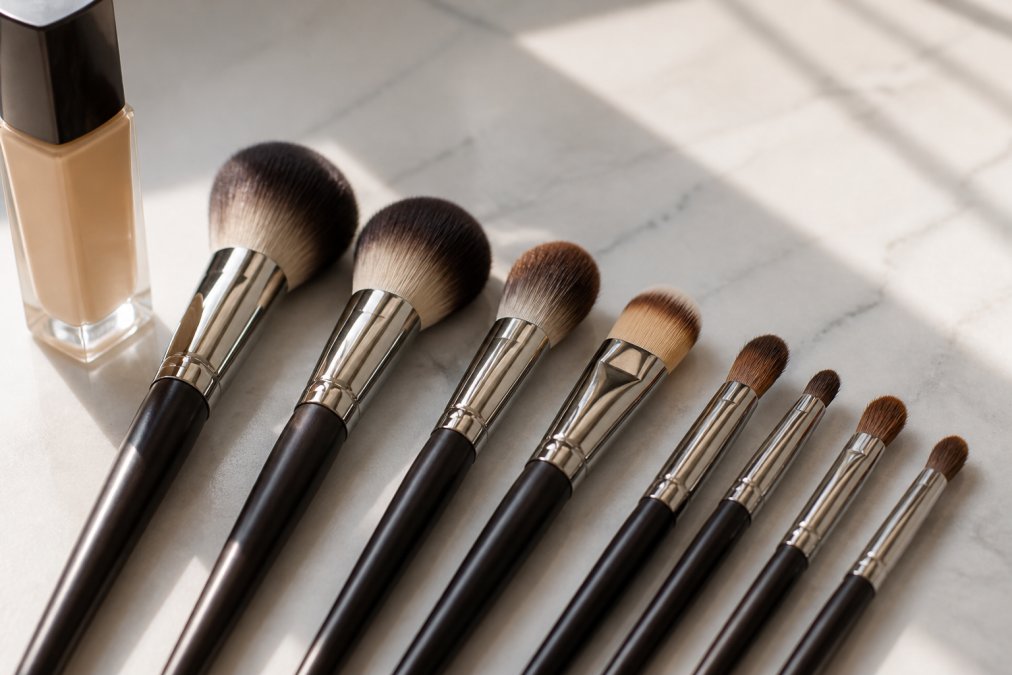
The best tools for streak-free foundation are synthetic bristle brushes and damp beauty sponges, used correctly and cleaned consistently.
Synthetic Bristle Brushes
Synthetic bristles are non-porous, giving you more control over coverage and preventing the product buildup that causes streaks. Natural bristle brushes, designed for powder products, absorb liquid and cream formulas and deposit them unevenly.
The Artist Atelier Flawless Foundation Brush (£25.00) uses ultra-soft, hypoallergenic synthetic fibres handcrafted in Seoul, designed for seamless liquid and cream coverage. The dense, tapered head buffs product into the skin rather than dragging it across the surface. The Foundation Brush - Streak-Free Liquid & Cream Coverage (£14.00) offers a rounded angled head that follows the contours of the face precisely, reducing the risk of brush streaks along the jaw and hairline.


Damp Beauty Sponge vs Brush: Which to Choose
A damp beauty sponge and a synthetic brush produce different finishes, and neither is universally better.
| Tool | Best For | Application Method | Finish |
|---|---|---|---|
| Damp beauty sponge | Dry, dehydrated, sensitive skin | Stippling, pressing | Skin-like, natural |
| Synthetic flat brush | Full coverage, oily skin | Buffing, circular motion | Airbrushed, polished |
| Synthetic angled brush | Contouring, precise coverage | Stippling, sweeping | Defined, buildable |
| Fingertips | Light coverage, quick application | Pressing, patting | Sheer, natural warmth |
A damp sponge stipples foundation into the skin rather than dragging it. The moisture prevents the formula from drying too quickly, reducing streaking and giving a skin-like finish. Squeeze the sponge until damp but not dripping before use.
A synthetic brush delivers more coverage and a polished finish. For oily skin, a buffing motion gives better adherence than a sponge, which can lift product where sebum has broken down the base.
Tool-Specific Cleaning Schedules
Dirty tools are one of the most overlooked causes of streaky foundation. Product buildup in brush bristles changes the texture of the tool, causing it to drag rather than blend.
A practical cleaning schedule:
- Daily: Spot-clean brushes with a quick-dry brush cleanser after each use
- Weekly: Deep-clean all foundation tools with a gentle brush shampoo, rinse thoroughly, and reshape bristles before drying flat
- Monthly: Inspect bristles for splaying or shedding, which indicates replacement is needed
According to NHS guidance on hygiene and skin health, bacteria transferred from unclean tools to the face can trigger breakouts and irritation, disrupting the skin's surface and making smooth foundation application harder.
Common Foundation Application Mistakes to Stop Making
Applying too much product at once. Foundation applied in a thick layer dries unevenly, leaving streaks and a cakey finish. Apply a small amount, blend fully, then build coverage in thin layers.
Using a dry sponge. A dry sponge absorbs foundation rather than distributing it, leaving patchy, uneven coverage. Always dampen your sponge before use.
Blending in one direction only. Swiping foundation in a single direction creates visible brush streaks. Use circular buffing motions or a stippling technique to work product in from multiple angles.
Skipping setting spray. Without setting spray to seal the base, foundation is vulnerable to separation and movement throughout the day.
Applying foundation to unprepared skin. Foundation applied directly to dry, unexfoliated, or unprimed skin will always streak. Skin prep is essential.
Not allowing layers to dry between application. Rushing each layer creates an unstable base. Give each product thirty seconds to set before adding the next.
Step-by-Step: How to Fix Streaky Foundation with the Right Technique
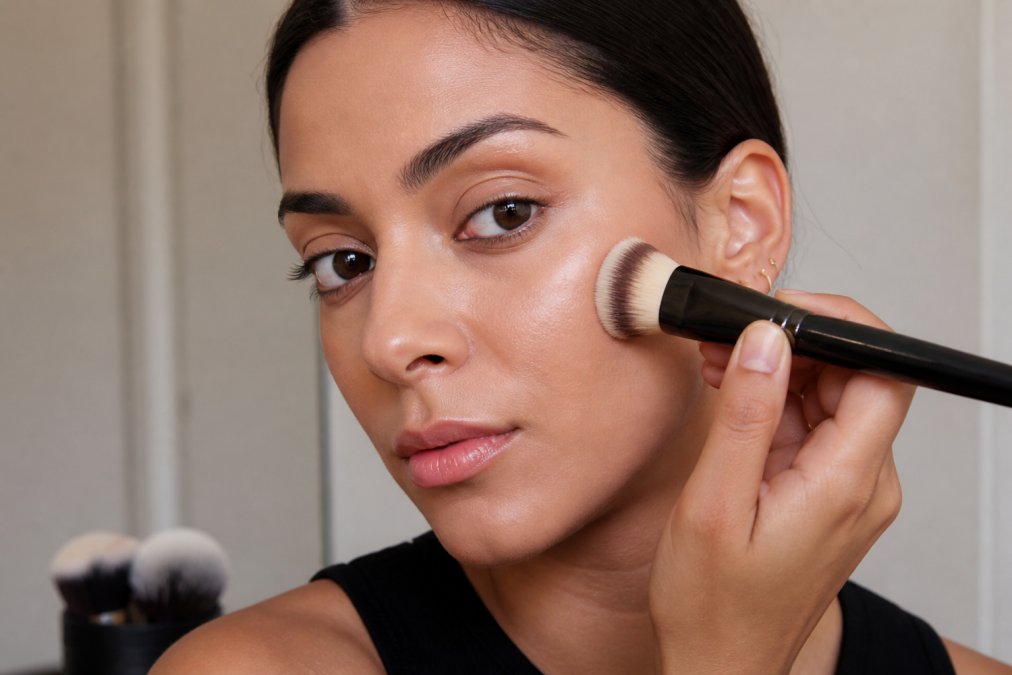
Fixing streaky foundation comes down to a clear sequence: correct skin prep, matched products, the right tool, and deliberate blending technique.
- Cleanse and moisturise. Start with clean, hydrated skin. Apply moisturiser and allow it to absorb for at least three minutes.
- Apply primer. Use a primer matched to your skin type and foundation base. Press it in with fingertips. Allow to set for sixty seconds.
- Dispense a small amount of foundation. A five pence coin-sized amount is enough for a full face. Add more only after blending the first layer fully.
- Apply to the centre of the face first. Dot foundation onto the forehead, nose, cheeks, and chin. Blend outward toward the hairline and jaw to avoid product buildup at the edges.
- Use the correct blending technique for your tool. See below.
- Check in natural light. Artificial lighting hides streaks. Step into daylight or use a daylight mirror before setting.
- Set with a light mist of setting spray. Hold at arm's length and mist evenly.
Buffing Motion vs Stippling Technique
Buffing involves small, circular motions that work product into the skin. This technique is best with a dense synthetic brush and gives a polished, airbrushed finish, particularly effective for oily skin and full-coverage formulas.
Stippling involves pressing and bouncing the tool against the skin rather than dragging it. This is the correct technique for a damp beauty sponge and for sheer, skin-like coverage. Stippling deposits product without disrupting layers beneath it, making it better for dry or sensitive skin and mid-wear touch-ups.
Using the wrong technique for your tool is a common cause of streaky foundation.
How to Fix Cakey or Separating Makeup Mid-Wear
- For cakey makeup: Dampen a clean beauty sponge and press it gently over affected areas. Do not rub. The moisture reactivates the formula and blends it back into the skin.
- For separating or oily areas: Blot with a clean tissue first to absorb excess sebum, then press a small amount of translucent powder over the area with a clean brush.
- For dry, flaky patches: Press a drop of facial oil or a spritz of hydrating facial spray into the area before gently stippling over it with a damp sponge.
Skin Type Specific Solutions for a Flawless Base
A single application method does not work across all skin types. Tailoring your approach to your skin's specific needs ensures a consistently flawless base.
Oily skin: Prioritise a mattifying, water-based primer and a water-based or oil-free foundation. Apply with a dense synthetic brush using a buffing motion. Set with a translucent powder and light setting spray. Avoid heavy emollient formulas, which accelerate separation.
Dry and dehydrated skin: Exfoliate regularly to remove flaky texture. Use a hydrating primer and a foundation with emollient ingredients. Apply with a damp beauty sponge using a stippling technique. Avoid powder-heavy formulas and over-setting, which exaggerate texture.
Combination skin: Apply a mattifying primer only to oily zones and a hydrating primer to dry areas. Use a damp sponge for dry zones and a brush for oily areas, or apply foundation with a brush and finish by pressing a damp sponge over the whole face to unify texture.
Sensitive skin: Synthetic bristle brushes are essential. The Artist Atelier Midnight Crane Foundation Brush (£21.00) uses hypoallergenic synthetic fibres gentle enough for reactive skin while delivering precise, full-coverage application. Avoid heavy layering, which creates product buildup that irritates the skin barrier.

Mature skin: Avoid heavy, full-coverage formulas that settle into fine lines. Use a light-coverage formula applied with a damp sponge using a stippling technique. Set minimally and use setting spray rather than powder to preserve a natural, skin-like finish.
Streaky foundation is rarely just a technique problem. The combination of product chemistry mismatches, inadequate skin prep, and the wrong tools working against each other causes most application failures. Artist Atelier's range of handcrafted, hypoallergenic synthetic brushes, including the Flawless Foundation Brush and the Midnight Crane Foundation Brush, are designed to work with your skin's texture rather than against it, giving you the control to build a seamless, streak-free base every time. Explore the Artist Atelier foundation brush collection and find the right tool for your technique.
Frequently Asked Questions
Why am I leaving streaks when applying foundation?
Streaky foundation usually comes down to three causes: mismatched product bases (such as applying a silicone-based primer under a water-based foundation), insufficient skin prep, or using the wrong tool. Dry patches and product buildup on unwashed brushes also break emulsification as you blend, dragging pigment rather than depositing it evenly. Switching to a clean synthetic-bristle brush and ensuring your primer and foundation share a compatible base resolves most cases.
Does primer help prevent streaky foundation?
Primer helps when it is compatible with your foundation. A silicone-based pore-filling primer under a silicone-based foundation creates a smooth, even surface. Mixing bases, however, causes separation and worsens streaking. Hydrating primers work well under water-based formulas for drier skin types. The rule is simple: match the base of your primer to the base of your foundation, and always allow the primer to set for at least 60 seconds before applying foundation.
Why does my foundation go patchy after a few hours?
Patchiness mid-wear is usually caused by inadequate skin hydration before application, oxidisation of the formula on oily skin, or emollient-rich moisturisers breaking down the foundation's hold. Flaky or dehydrated areas absorb pigment unevenly, creating a patchy complexion by midday. A hydrating facial spray pressed gently into the skin can revive the base without disturbing coverage. Setting spray applied at the end of application also significantly extends wear.
How do I stop foundation looking streaky when using a brush?
Use a clean brush with synthetic bristles, which pick up less product and deposit it more evenly than natural-hair alternatives. Apply foundation in small amounts using a circular buffing motion rather than sweeping strokes, which are the primary cause of brush streaks. Work in sections, blending each area before moving on. A light hand throughout is essential, thin, buildable layers always outperform a single heavy application for a streak-free, flawless base.
This article was written using GrandRanker