

Table of Contents
- How Bacteria Accumulates on Makeup Brush Bristles
- The Link Between Dirty Brushes and Acne Vulgaris
- How to Clean Makeup Brushes Properly
- How Often to Wash Foundation Brushes
- Signs Your Brushes Are Causing Breakouts
- Acne-Prone Skin Makeup Tips for Safe Application
- The Danger of Sharing Makeup Tools and Cross-Contamination
- Conclusion
Last Updated: August 20, 2026
How Bacteria Accumulates on Makeup Brush Bristles
Bacteria accumulates on makeup brush bristles because they create the perfect environment for microbial growth. Each time you apply makeup, your brush collects dead skin cells, sebum, makeup residue, and environmental pathogens that lodge deep within the bristle fibres, where moisture and warmth enable bacteria to multiply rapidly.
The bristle structure itself traps debris. Unlike smooth surfaces, brush bristles are densely packed fibres with microscopic gaps where bacteria and fungi settle, protected from air exposure. A single unwashed brush can harbour millions of bacterial cells within weeks of regular use.
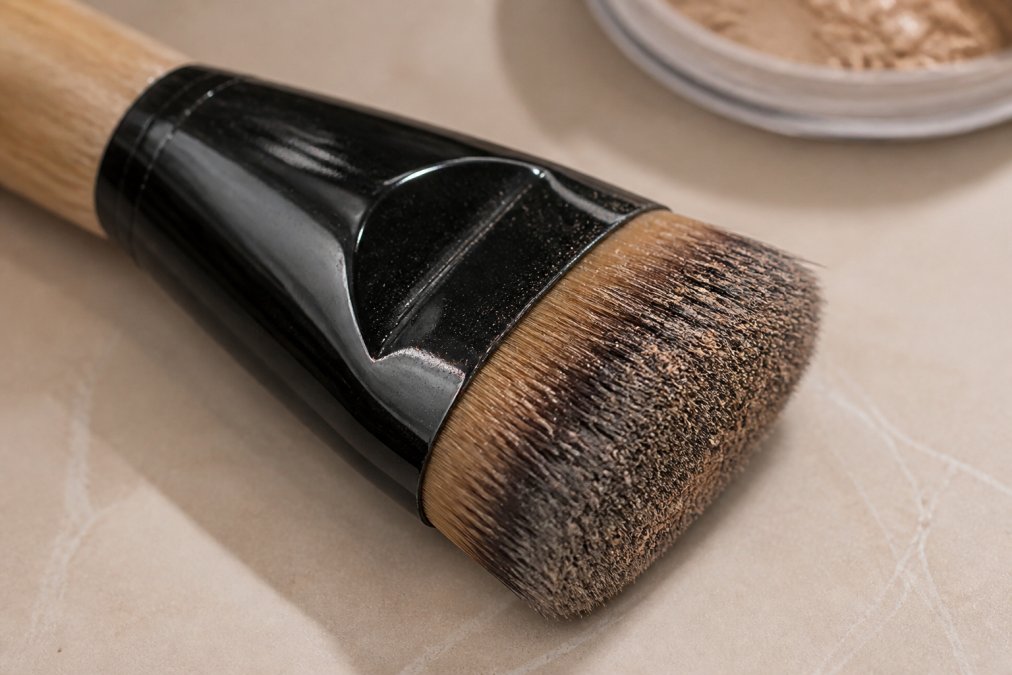
You then press these contaminated bristles directly onto your face. The ferrule (the metal part holding the bristles) also traps moisture and product, creating a secondary contamination zone. Professional makeup artists understand this risk, which is why hygiene protocols are central to Artist Atelier's workshop training, proper brush maintenance is as essential as technique itself.
Dead skin cells and oil buildup accelerate bacterial colonisation. When combined with sebum and the occlusive environment of a closed makeup bag, these organic materials become a food source for acne-causing bacteria like Propionibacterium acnes and Staphylococcus aureus. A damp brush stored in a warm bathroom creates conditions bacteria thrive in, allowing microbes to persist and multiply even after air-drying if moisture remains deep within the bristles.
The Link Between Dirty Brushes and Acne Vulgaris
The connection between dirty makeup brushes and acne vulgaris is direct. When acne-causing bacteria from your brush contact your skin, they trigger inflammatory responses that lead to comedones, pustules, and cystic breakouts. Acne vulgaris develops when four conditions align: excess sebum production, follicular hyperkeratinisation, bacterial colonisation, and inflammation. A dirty brush directly contributes to bacterial colonisation, introducing pathogens into pores where your skin barrier is already compromised by makeup application.
Each application introduces fresh bacteria that overwhelm your skin's natural defences. For acne-prone skin, this creates a vicious cycle: the brush causes breakouts, which create inflammation, which makes skin more vulnerable to future bacterial invasion. Repeated, concentrated doses from contaminated bristles overwhelm local immune responses, resulting in rapid pore congestion and visible breakouts within 24-72 hours.
Cross-contamination between facial zones amplifies the problem. A foundation brush used across your entire face transfers bacteria from your T-zone (where sebum production is highest) to your cheeks and forehead. The minimal-kit philosophy that Artist Atelier teaches addresses this, using fewer, well-maintained brushes reduces contamination vectors on your face.

Makeup application itself slightly compromises your skin barrier by creating an occlusive layer. Add bacterial contamination from a dirty brush, and your barrier becomes overwhelmed. People with sensitive skin or conditions like rosacea experience this more severely because their barrier is already compromised.
How to Clean Makeup Brushes Properly
Proper brush cleaning requires a systematic approach that removes both visible residue and embedded bacteria without damaging the delicate fibres.
Start by rinsing the brush under warm running water with bristles pointing downward so water flows away from the ferrule, water entering the ferrule can loosen the glue holding bristles in place. Gently work the bristles under the water stream to release surface makeup and debris.

Apply a gentle cleanser designed for brushes or mild shampoo. Work the cleanser through the bristles using circular motions in your palm for 30-45 seconds, rushing means bacteria remains. Rinse thoroughly under running water until the water runs completely clear, as soap residue is often invisible but still present.
For deep cleaning, use a brush cleaning solution once weekly to break down stubborn makeup residue and kill bacteria more effectively than basic soap. Submerge the bristles for the recommended time (usually 5-15 minutes), then rinse thoroughly.
Drying is as important as washing. Pat the bristles gently with a clean towel, never wring or squeeze them. Reshape the bristles while damp and lay the brush flat or hang it bristle-side down so air circulates. Brushes need 24 hours to dry completely. For ultra-soft, hypoallergenic brushes like those handcrafted by Artist Atelier, gentle handling throughout cleaning preserves their soft texture and prevents shedding.
How Often to Wash Foundation Brushes
Foundation brushes require more frequent cleaning than other makeup tools because they apply product directly to large facial areas and collect more bacteria per use. A foundation brush should be washed every 3-7 days for acne-prone skin, and at minimum every 7-10 days for resilient skin.

Daily use means the brush collects significant bacterial load, dead skin cells, and sebum each application. By day seven without cleaning, bristle contamination is substantial enough to cause breakouts in sensitive individuals. For acne vulgaris or inflammatory skin conditions, every 3-5 days is ideal.
Professional makeup artists wash brushes daily or between every client because professional work involves applying makeup to multiple faces, where cross-contamination risk is high. Consider your makeup type when deciding frequency, full-coverage, long-wear foundations require more vigorous application and create thicker residue buildup than lightweight formulas.
Environmental factors also influence washing frequency. During humid months or if you store brushes in a damp bathroom, bacteria multiply faster. Increase washing frequency during summer or in high-humidity climates. If your skin is experiencing an active breakout, wash your foundation brush every 2-3 days to avoid reintroducing bacteria to healing skin.
| Skin Type | Recommended Frequency | Reasoning |
|---|---|---|
| Acne-prone | Every 3-5 days | Minimises bacterial reintroduction to compromised skin |
| Sensitive | Every 5-7 days | Reduces irritation from accumulated residue and bacteria |
| Resilient/Normal | Every 7-10 days | Adequate for standard bacterial load from daily use |
| Professional use | Daily or between clients | Prevents cross-contamination across multiple faces |
Signs Your Brushes Are Causing Breakouts
Breakouts appearing 24-48 hours after makeup application, concentrated in areas where you apply foundation, suggest brush contamination. This timing is characteristic of bacterial introduction. If breakouts appear in the exact pattern of your brush strokes, the brush is almost certainly the source.
Breakouts that worsen on days you wear makeup but improve when you skip makeup application point directly to your tools. If your skin clears within 3-5 days of not using makeup but breaks out again when you resume, your brush is introducing bacteria your skin can't manage.
New breakouts in areas you don't normally experience acne suggest external contamination. If your cheeks suddenly break out but your T-zone remains clear, and you haven't washed your brushes in weeks, the brush is the likely culprit.
Persistent low-grade inflammation, redness, or sensitivity in areas where you apply foundation indicates chronic bacterial exposure. Your skin barrier becomes compromised, leading to sensitivity even to products that previously didn't irritate you.
Breakouts that don't respond to acne treatments (topical retinoids, benzoyl peroxide, salicylic acid) but improve when you switch to clean brushes confirm the brush is the source. Breakouts clustered around the ferrule area or along brush stroke lines are dead giveaways, since the ferrule traps more bacteria than bristle tips.
Acne-Prone Skin Makeup Tips for Safe Application
Use a light hand when applying foundation. Gentle stippling motions (pressing rather than dragging) deposit product on the skin surface without forcing it into pores, reducing pore congestion and minimising bacterial introduction.
Apply foundation only where you need coverage. Use concealer on blemishes and problem areas, then apply lighter foundation or tinted moisturiser to the rest of your face. This reduces the overall bacterial load you're introducing.
Let your skin barrier recover between makeup days. Going makeup-free one or two days weekly gives your skin time to shed accumulated dead skin cells, regulate sebum production, and recover from the occlusive effect of makeup.
Choose brushes designed for sensitive skin. Synthetic fibres are less likely to harbour bacteria than natural hair brushes because they don't absorb moisture as readily. Ultra-soft synthetic brushes like those handcrafted by Artist Atelier are specifically formulated to be hypoallergenic and gentle on reactive skin.
Avoid sharing brushes with anyone else. Your skin has adapted to your own bacterial flora, but introducing someone else's bacteria creates an immune response. Even if the other person doesn't have acne, their bacterial colonies are unfamiliar to your skin and can trigger inflammation.
During active breakouts, clean your brush before each application. Your skin barrier is compromised and your immune system is already fighting inflammation. Using a perfectly clean brush prevents adding new bacterial stress to an already-inflamed system.
Store brushes in a clean, dry location. Never leave brushes in a damp bathroom or sealed makeup bag. Use a brush holder that allows air circulation, or store brushes bristle-side up in a clean cup.
The Danger of Sharing Makeup Tools and Cross-Contamination
Sharing makeup brushes transfers acne-causing bacteria between people. Each person's skin has a unique bacterial ecosystem adapted to their individual pH, sebum production, and immune response. When you introduce someone else's bacteria to your skin, your immune system recognises it as foreign and mounts an inflammatory response.
A single use of someone else's brush transfers millions of bacterial cells to your face. The bacteria establish themselves in your pores and begin multiplying within hours. Professional makeup artists use either single-use applicators or brushes cleaned with hospital-grade disinfectants between clients to prevent cross-contamination.
Makeup testers in retail environments pose a particular risk, typically used by dozens of people daily without proper sanitisation. Use a fresh applicator provided by the store, never a shared brush.
Fungal infections can also spread through shared brushes. Conditions like tinea versicolor or seborrheic dermatitis thrive in the warm, moist environment makeup brushes provide. The safest approach is to never share any makeup tools with anyone, including family members and close contacts.
Makeup brush hygiene directly determines whether your skin stays clear or breaks out repeatedly. The bacteria accumulating on unwashed bristles isn't inevitable, it's preventable through consistent, proper cleaning and storage practices.
Artist Atelier's professional-grade brushes are handcrafted with hypoallergenic synthetic fibres specifically designed to minimise bacterial harbouring and irritation. The brand's hands-on workshops teach the hygiene protocols that transform your entire makeup routine. When you understand why makeup brushes cause skin breakouts and how to prevent it, you stop treating breakouts as a skin problem and start treating them as a tool maintenance problem. The Flawless Foundation Brush - Seamless Base Makeup combines ultra-soft bristles that reduce pore trauma with a smooth ferrule design that's easier to sanitise thoroughly, making it an ideal choice for acne-prone skin. Pair it with a weekly deep-cleaning routine, and you'll see measurable improvement in breakout frequency within 2-3 weeks.

Frequently Asked Questions
How often should you wash your makeup brushes to prevent acne?
Foundation and concealer brushes should be washed weekly, as these tools collect the most sebum, dead skin cells, and bacteria. Blending and eyeshadow brushes can be cleaned every 1-2 weeks. If you have acne-prone skin, wash foundation brushes more frequently, ideally twice weekly. Regular cleaning prevents microbial growth and reduces breakout triggers significantly.
Can dirty makeup brushes cause fungal acne?
Yes. Dirty brushes harbour bacteria and fungi that can trigger fungal acne (pityrosporum folliculitis), which appears as small, uniform bumps across the forehead and cheeks. This occurs when contaminated bristles introduce pathogens into pores. Proper brush sanitisation and weekly cleaning are essential preventative measures, especially for those with sensitive or compromised skin barriers.
How do I know if my makeup brushes are causing my breakouts?
If breakouts appear primarily on your face where you apply makeup, foundation zones, cheeks, and T-zone, dirty brushes may be the culprit. Other signs include persistent redness, irritation, or acne that worsens despite using non-comedogenic products. Try switching to freshly cleaned brushes for one week; if breakouts improve, your tools were likely the issue. Hypoallergenic brushes also reduce skin sensitivity and inflammation.
Do hypoallergenic makeup brushes help prevent skin irritation and breakouts?
Hypoallergenic brushes, made from ultra-soft synthetic or natural fibres free from harsh chemicals, reduce skin irritation and dermatitis risk. They minimise cross-contamination when properly maintained and are less likely to harbour pathogens. Combined with a rigorous cleaning routine, hypoallergenic brushes significantly lower breakout triggers for sensitive skin. Quality matters, professional-grade tools like those handcrafted with premium materials offer superior hygiene and durability.
This article was written using GrandRanker