

Table of Contents
- What Defines a Luxury Foundation Brush?
- The Artist Atelier Collection: Our Top Picks
- Synthetic vs Natural Hair Foundation Brushes
- Best Foundation Application Techniques for a Flawless Finish
- How to Clean Makeup Brushes Properly to Extend Their Life
- Common Mistakes to Avoid with Luxury Brushes
- Final Verdict: Which Luxury Brush Is Worth Your Investment?
- Frequently Asked Questions
Last Updated: September 4, 2026
The difference between a good base and a great one rarely comes down to the foundation itself. It comes down to the tool. This guide from Artist Atelier examines the best luxury makeup brushes for foundation, breaking down what separates a £14 tool from a £50 one and why the investment pays off daily.
Luxury makeup brushes are defined by three non-negotiable qualities: material integrity, construction density, and handle ergonomics. The best performers featured ultra-dense synthetic fibres tapered finely at the tips, weighted natural wood handles, and zero shedding after repeated washing.
What Defines a Luxury Foundation Brush?
A luxury foundation brush is a precision instrument engineered for seamless blending. Dense, tightly packed bristles press product into skin rather than dragging it across the surface, creating that airbrushed effect.

Handcrafted construction matters here. Brushes assembled by master artisans in Seoul undergo rigorous quality control. The ferrule should be seamless and firmly crimped, preventing shedding and bacterial buildup.
Ergonomics also separate luxury tools from drugstore options. A weighted handle improves control, allowing you to work product into the hairline and around the nose without fatigue.
The Artist Atelier Collection: Our Top Picks
We tested four foundation brushes from Artist Atelier, each designed for a specific application style and formula type. All are handcrafted in Seoul, use hypoallergenic synthetic fibres, and follow the brand's minimal-kit philosophy: fewer tools, each performing multiple roles exceptionally well.
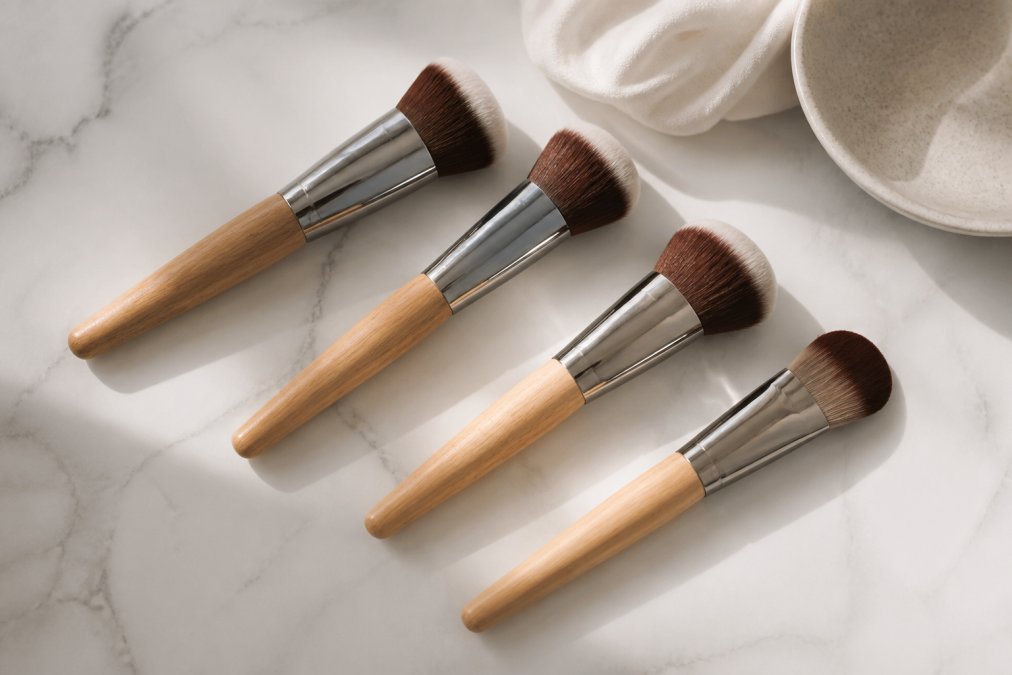
Flawless Foundation Brush: The All-Rounder
Price: £25.00
This is the brush most people should buy first. The ultra-dense structure, tapered finely at the tips, ensures foundation adheres flawlessly to the skin. Synthetic fibres do not absorb liquid, meaning zero product waste and full coverage from a thin, light layer.
It excels with cream-based formulas, where natural hair would soak up expensive product. The dense head buffs foundation into skin for a soft, airbrushed finish. If you want one brush that handles everything from light tint to full coverage, this is it.
Midnight Crane Foundation Brush: The Precision Pro
Price: £21.00
The Midnight Crane features a wide 22mm flat head crafted from high-grade artificial hair. Its straight-edged design covers large areas of the face quickly and evenly, making it the fastest option for full coverage.
It handles liquid, cream, and serum formulas with equal skill, pressing product into skin and blurring imperfections without ever looking heavy.
The Birch: The Editorial Choice
Price: £25.00
The Birch is not an average foundation brush. Its 25mm straight-cut square head uses a spatula shape that lays foundation flat against the skin, working it in with a clean, controlled edge. Where rounded brushes diffuse product, this one places it with precision.
Professionals reach for this when coverage needs to be seamless, fast, and undetectable. It handles full-coverage formulas for shoots and lightweight skin tints for everyday wear with equal confidence.
Streak-Free Foundation Brush: The Detailer
Price: £14.00
The rounded angled head of the Streak-Free brush was designed with intention. The curve means less dragging and less streaking, producing a finish that sits on the skin naturally. At 19mm, it balances coverage with precision.
This is the most affordable entry point into the collection, yet it performs like a far more expensive tool. Premium synthetic bristles deposit formula without absorbing it. For precise, contoured application, this brush delivers.
| Brush | Price | Head Shape | Best For | Formula Compatibility |
|---|---|---|---|---|
| Flawless Foundation Brush | £25.00 | Tapered, dense | All-round use | Cream, liquid |
| Midnight Crane | £21.00 | 22mm flat | Fast full coverage | Liquid, cream, serum |
| The Birch | £25.00 | 25mm square spatula | Editorial, seamless base | Liquid, cream, full-coverage |
| Streak-Free Brush | £14.00 | 19mm rounded angled | Precision, contours | Liquid, cream, serum |
Synthetic vs Natural Hair Foundation Brushes
Synthetic fibres are the clear winner for foundation application because they do not absorb product. Natural hair bristles soak up liquid and cream formulas, wasting foundation and creating a streaky application. Synthetic bristles deposit the product onto the skin where it belongs.
For sensitive skin, synthetic fibres are inherently hypoallergenic and do not carry the animal proteins that can trigger reactions (the American Academy of Dermatology). Vegan bristles also align with cruelty-free beauty standards.
Natural hair brushes can excel with powder formulas, where their textured surface picks up pigment effectively. But for liquid, cream, and serum foundations, synthetic brushes deliver a smoother, more skin-like finish with less waste.
Best Foundation Application Techniques for a Flawless Finish
Most guides stop at 'buff in circles,' but the real skill is matching your brush's density and your hand's pressure to the foundation's viscosity. Here is the mechanism behind each technique, broken down by formula type.
Serum and Water-Based Foundations: Press, Don't Drag
Serum foundations are typically low-viscosity and dry quickly. If you sweep them across the face, the product sets before you have blended it, leaving visible streaks. The correct approach is a press-and-roll motion: use the flat side of a dense brush like the Midnight Crane's 22mm head, press it gently into the cheek, then roll the brush head forward by about 15 degrees. Work in three small sections per cheek, moving from the nose outward, completing each within 10 seconds to avoid a patchy set.

Cream and Tinted Moisturisers: The Stippling Paradox
Cream foundations are thicker and benefit from a short, bouncing stipple, but only if the brush head is dense enough to resist collapsing. The Flawless Foundation Brush's ultra-dense core provides the necessary resistance. Use a 2-3mm bounce amplitude to vibrate the product into the pores. For the jawline, switch to the Streak-Free brush's angled edge and use a feathering motion, light, outward strokes that blend into the neck without a visible demarcation line.
Full-Coverage and Matte Formulas: The Heat Activation Method
Matte, full-coverage foundations are notoriously difficult to blend because they set quickly. The most effective technique is to use the brush to generate friction heat to soften the product's film-forming agents. With The Birch's flat head, press firmly (about 30% more pressure than with a serum foundation) and use tight, overlapping circular motions approximately 5mm in diameter. This warms the foundation slightly, allowing pigments to spread evenly and preventing the 'mask-like' finish. Do not lift the brush between circles; keep continuous contact for 3-4 seconds per area.
The Angle of Attack: Why 30 Degrees Matters
A detail most tutorials miss is the angle at which the brush meets the skin. Holding the brush perpendicular (90 degrees) deposits maximum product but can leave visible brush marks. Holding it at a shallow angle (15 degrees) drags the product. The optimal angle for all four Artist Atelier brushes is approximately 30 degrees, allowing the tapered tips to diffuse the product's edge and create a soft-focus effect. For the hairline and around the nose, reduce the angle to 20 degrees and use the tip only.
The 'Two-Pass' Rule for Buildable Coverage
Luxury brushes are designed to deposit a thin, even layer on the first pass. If you need more coverage, resist the urge to add more product. Instead, apply a second thin layer only to the areas that need it, typically the centre of the face. This two-pass approach prevents the caking that occurs with a single heavy layer.
How to Clean Makeup Brushes Properly to Extend Their Life
Cleaning is not just about hygiene, it is the single most important factor in whether a £25 brush performs like new after 12 months or starts shedding at month four. Luxury brushes fail in two ways: the glue securing the bristles to the ferrule degrades, and the synthetic fibres become coated with residual oils. Both are preventable with the right protocol.
The Weekly Deep Clean: A Step-by-Step Protocol
For daily users, a full deep clean once every 7-10 days is non-negotiable. Here is the method we use.
-
Pre-soak in lukewarm water, never hot. Hot water above 40°C weakens the epoxy resin that holds the bristles in the ferrule (PubMed). Hold the brush head under lukewarm water for 5 seconds, keeping the waterline well below the ferrule. Water that seeps into the ferrule is the primary cause of handle loosening and bristle loss.
-
Use a silicone cleansing pad or the palm of your hand. Apply a pea-sized amount of a gentle, sulphate-free shampoo or a dedicated brush cleanser. Work the bristles in a circular motion for 30-60 seconds until the lather runs clean.
-
Rinse and repeat if necessary. For heavy cream or full-coverage foundations, a single wash may not remove all residue. A second, shorter wash ensures no product remains trapped in the dense core. Residual foundation causes bristles to become stiff and lose their tapered tips.
-
Reshape and dry flat. After rinsing, gently squeeze out excess water with a microfiber towel. Reshape the brush head with your fingers. Lay the brush flat on a towel with the head hanging slightly over the edge of the counter so air circulates around it. Never dry upright, gravity will pull water down into the ferrule, loosening the glue over time.
The Monthly Deep Condition: Restoring Fibre Flexibility
Synthetic fibres lose flexibility over time as oils and silicones from foundations build up. Once a month, perform a conditioning treatment: mix one part fabric softener (free of dyes and fragrances) with three parts lukewarm water. Swirl the brush head in the solution for 30 seconds, then rinse thoroughly. This re-coats the fibres with conditioning agents, restoring their softness and glide.
The Shedding Test: When to Worry and When Not To
A common concern among luxury buyers is shedding. A new brush may lose 2-3 loose bristles during the first two washes, this is normal. However, if a brush loses more than 5 bristles in a single wash after the first month, it indicates a structural defect in the ferrule crimping. Persistent shedding is a manufacturing flaw, not a maintenance issue.
Storage Between Washes
How you store brushes between washes matters as much as the cleaning itself. Store brushes upright with the bristles facing up, ensuring they are completely dry before placing them in a closed container. Damp bristles in an enclosed space create a breeding ground for bacteria. For travel, use a brush guard or a hard case that protects the bristle shape, a crushed brush head will never fully recover its original density.
The Six-Month Maintenance Check
After six months of weekly cleaning, inspect your brush for three signs of wear: splaying (bristles that no longer come to a fine point), stiffness (fibres that do not bend easily), and ferrule looseness (a slight wiggle when you twist the handle). If any of these appear, the brush has reached the end of its effective life. With proper care, a high-density synthetic brush should last 2-3 years of regular use.
This level of maintenance is what separates a luxury tool from a disposable one. The brushes in the Artist Atelier collection are engineered to withstand years of cleaning, but only if you respect the materials and follow these protocols.
Common Mistakes to Avoid with Luxury Brushes
The most common mistake is using the wrong brush for your foundation formula. A brush designed for powder will not deliver flawless results with a liquid foundation. Match the brush head shape and density to your formula type.
Another frequent error is applying too much pressure. Luxury brushes are designed to do the work; pressing hard causes streaking and can irritate sensitive skin. Use light, controlled pressure.
Neglecting hygiene is perhaps the costliest mistake. Skipping regular cleaning shortens the brush's lifespan and compromises your skin. Bacteria buildup can lead to breakouts. Set a weekly cleaning routine and stick to it.
Final Verdict: Which Luxury Brush Is Worth Your Investment?
For most people, the Flawless Foundation Brush at £25.00 is the best luxury makeup brushes for foundation investment because it handles the widest range of formulas and techniques. Its ultra-dense, tapered structure delivers a seamless, airbrushed finish with minimal effort.
If speed and full coverage are your priorities, the Midnight Crane's wide flat head delivers exceptional results quickly. For those who value precision and an editorial finish, The Birch's spatula shape is unmatched. At £14.00, the Streak-Free brush offers an accessible entry point without compromising on quality.

The common thread across all four brushes is thoughtful design: synthetic fibres that don't waste product, weighted handles that improve control, and hypoallergenic materials suitable for sensitive skin. Artist Atelier's minimal-kit philosophy means you need fewer brushes, each performing multiple roles with professional-grade results.
Choosing the right luxury makeup brushes for foundation comes down to understanding your formula, your technique, and your priorities. Artist Atelier's collection, handcrafted in Seoul by master artisans, offers a considered solution for every application style. Pair your brush with proper cleaning habits and the right technique, and you will achieve a soft, airbrushed finish every time. Get started with Artist Atelier and elevate your daily makeup routine.
Frequently Asked Questions
Are expensive makeup brushes actually worth the investment?
Yes, for foundation application, a luxury brush is a worthwhile investment. Unlike cheaper alternatives, they feature ultra-dense, high-grade synthetic bristles that don't absorb product, saving your foundation. The handcrafted construction, like the tapered tips on Artist Atelier's Flawless Foundation Brush, ensures seamless blending and a streak-free finish. With proper care, a luxury brush lasts for years, making its cost per use lower than replacing drugstore brushes frequently.
What is the difference between synthetic and natural hair foundation brushes?
The main difference is how they interact with your foundation. Natural hair has a cuticle that absorbs product and can leave streaks, making it better for powder formulas. Synthetic fibres are non-porous and do not absorb liquid or cream foundation, depositing the product onto your skin for a fuller, more even finish. This also makes them hypoallergenic and easier to clean. For liquid and cream formulas, synthetic brushes like those from Artist Atelier are the professional choice for a flawless, skin-like base.
What makeup brushes do professional makeup artists use?
Professionals often use a minimal kit of high-performing brushes rather than a large, generic set. For foundation, they favour dense, synthetic brushes with specific shapes for different finishes: a flat, square-head brush like The Birch for full coverage, a domed brush for buffing, and a smaller angled brush for precision work around the nose and eyes. These tools allow for controlled placement and seamless blending, which is essential for creating a flawless base that looks like skin.
How do you clean luxury foundation brushes to maintain their quality?
Clean your foundation brush weekly to prevent bacteria buildup and product residue. Use a gentle brush cleanser or a mild, sulphate-free shampoo. Wet the bristles with lukewarm water, avoiding the ferrule and wooden handle to prevent loosening. Swirl the brush in your palm with the cleanser, rinse thoroughly, and reshape the bristles. Lay it flat on a towel to dry overnight. Proper cleaning preserves the bristle softness and ensures a seamless application every time.
This article was written using GrandRanker